


‘Richly rewarding’: why Netflix’s A Different World is the only TV reboot worth watching this year
‘Richly rewarding’: why Netflix’s A Different World is the only TV reboot worth watching this year

Andrew Lawrence Mon, September 28, 2026 at 11:01 AM UTC
0
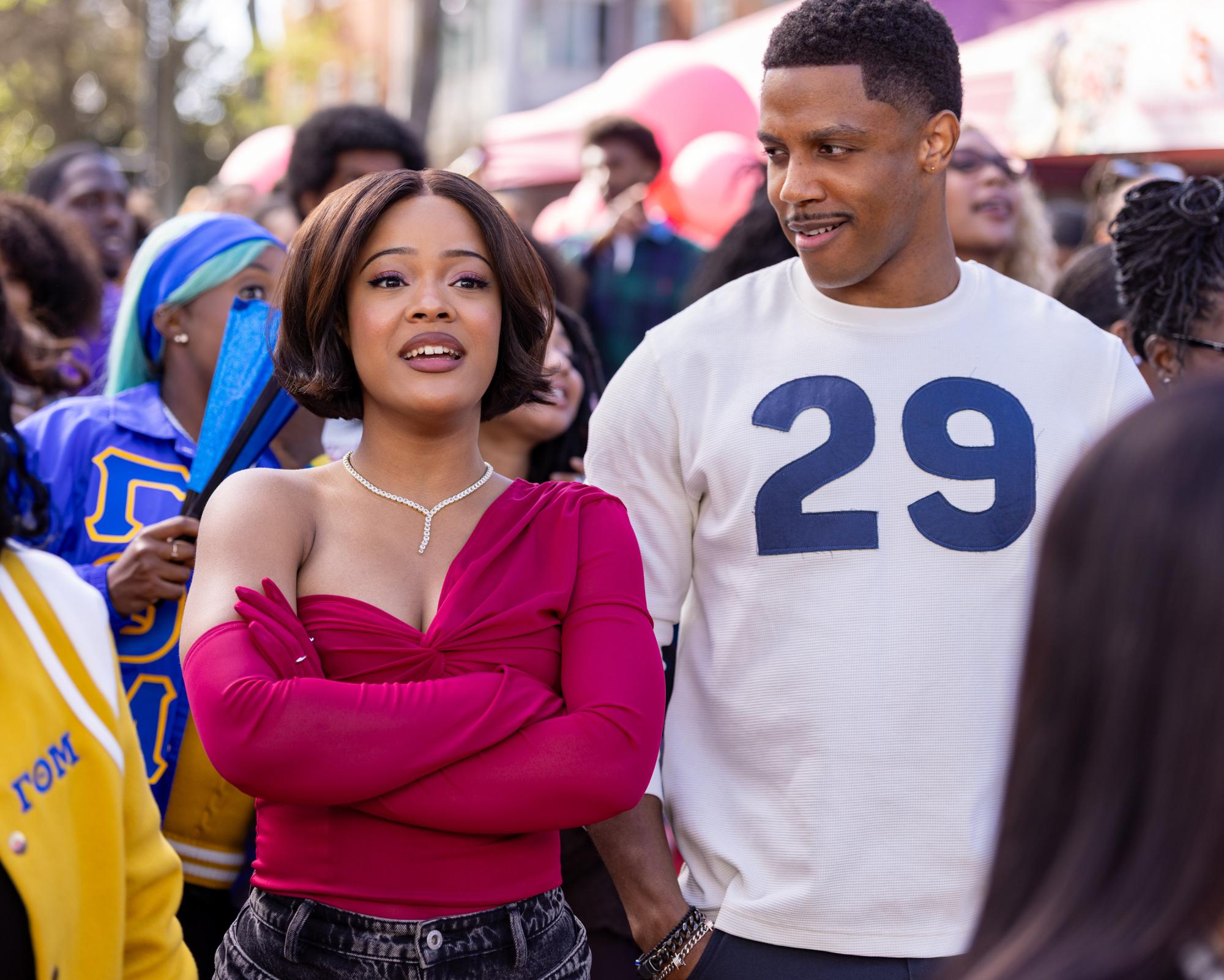
Maleah Joi Moon and Vincent Jamal Hooper in A Different World.Photograph: Eli Ade/Netflix
It’s often the case that nothing disappoints like a sitcom reboot. The Malcolm in the Middle revival is missing Dewey. The Saved By the Bell felt like detention punishment. And Just Like That … had Sex and the City diehards sharpening their stilettos.
When Netflix announced plans to reboot A Different World two years ago, fans of the Cosby Show spinoff mostly saw reasons not to. Too much time had passed since the show’s 1992 sign-off. Too much cultural currency had been invested in the show and in Hillman College – the series backdrop that was like Wakanda before Wakanda, a grand bastion of fictional yet somehow tangible Black excellence that drove attendance at historically Black colleges and universities (HBCUs) and a crowd-sourced CRT education boom online. And too much cynicism had set in among American TV viewers to bother replicating the show’s classic multicam setup – too dusty and fusty, they might sneer.
Related: A Different World review – it was only a matter of time before they remade this trailblazing black sitcom
Despite all this, the born-again A Different World landed on the streamer this week, and I am relieved – and, really, quite stunned to report that we finally have a sitcom reboot that actually meets the brief.
The sitcom reboot would seem to have a tougher assignment than its film and TV drama counterparts. It’s not enough to simply advance the story, update the premise or facilitate a clean handoff from the beloved foundational cast to the new. It has to feel fresh and like old times, bring back the long-lost ritual of gathering around the TV as a country to escape into a world where laughter helps navigate us past our differences and disagreements on the way to genuine community.
A Different World wasn’t just a Black thing. It was spun off from the mostinfluential sitcomof its time, mainstream America’s introduction to an upwardly mobile Black family that reveled in African American culture, history and arts. A Different World followed Lisa Bonet’s Denise Huxtable, the bohemian in the family, as she studied at her parents’ alma mater, Hillman – already well established as part of The Cosby Show’s general commitment to promoting real HBCUs such as Howard, Tuskegee and Wilberforce. But when Bonet became pregnant with her first child, Zoë Kravitz, in the middle of A Different World’s first season, it made Bill Cosby wary of the optics of portraying an expectant mother in college. Bonet exited A Different World after its debut season and returned to The Cosby Show.
Debbie Allen, the prodigious actor, dancer and Howard alumna, took over as the showrunner for A Different World in season two and effectively saved the series from cancellation. Her masterstroke was retooling what had been a Bonet-focused cast into a true ensemble and reorganizing the show around the will-they/won’t-they tension between the southern belle Whitley Gilbert and slick math nerd Dwayne Wayne, played by the estimable Jasmine Guy and Kadeem Hardison. Not only did their clashes become a cultural flashpoint – their marriage kicked off with Whitley jilting another man at the altar when Dwayne registered one of the most notable objections in TV history – but so did all the hairstyles, clothes and music on the show. It became a showcase for Black Hollywood mainstays (Loretta Devine, Diahann Carroll) and then up-and-comers (Halle Berry, Jada Pinkett), while providing a platform to raise awareness of Aids, domestic violence and other pressing issues of the day.
Advertisement
Felicia Pride, the showrunner of the reboot (the original appears as A Different World 1987 in the Netflix carousel now), gives this tradition a modern spin. Her single-cam production uses the same visual grammar of Grown-ish and Dear White People to establish a tone that’s more underplayed and nuance-driven, stopping just short of making the full Bel-Air pivot into drama. A zany scene about a freshman bootlegging scheme at a football game, broken up by a campus cop on a Segway, ends with one of the bootleggers confessing he’s already on probation for another case – a pointed reminder of the wildly different lives students can bring with them to an HBCU. When another character, Glynn Turman’s uptight Col Bradford Taylor, punctuates a matter-of-fact cancer survival story with an instruction to “check that prostate”, there was no mistaking the fleeting moment for what it was: a vintage network TV PSA.
Related: Price hikes, ads and lower quality: has ‘streamflation’ ruined the TV experience?
Pride broke the franchise out of its Hollywood sound stage and shot the reboot at the Atlanta University Center – the interconnected campuses of Morehouse College, Spelman College and Clark Atlanta University. Her reboot doesn’t embellish modest campus accommodations or shy from bringing controversies ripped from the headlines into the story: institutional graft, chronicunderfunding, enrollmentchaos, campus bomb threats. Hillman’s star quarterback chooses the school over the bright lights and big money of a predominantly white institution, while the storyline about a queer male student who competes with his super-Christian girl bestie for guys taps into evergreen discussions around Black religiosity and tolerance for relationships that don’t fit the mold. Meanwhile, the obligatory efforts to connect with younger viewers – through on-screen text message bubbles, narrative-driven social media screeds and cameos from modern influencers (from the NFL’s Cam Jordan to the Howard-born Partners in Prime) – read more like tiny textures than outright pandering.
But Pride had another advantage: college was a natural mesh point between the old and new. She got all the main players in the original cast who are still around to return for the reboot and gave them meaningful connections to the new kids. And it isn’t just Maleah Joi Moon’s Deborah (pronounced deb-BOR-ah), Dwayne and Whitley’s problem third child, who has a legacy at Hillman – where her mother sits on the board and her father is interim provost. When her roommate, Rashida, phones home, the woman on the other end is actress Alijah Kai’s actual mother – sitcom queen Tichina Arnold, a second layer of nepotism that makes Easter egg-loving audiences melt.
Then, for a third layer of irony, Alijah wears a Coogi-inspired crop dress in one episode – a clear nod to the sweater-loving creator who was canceled and divorced from this TV universe during #MeToooversexualassaultallegations. (Cosby is not credited in the new series.) In another episode, Deborah and Rashida team up in hopes of convincing Summer Walker to headline a homecoming concert, ambushing the Girls Need Love singer in her hotel room. Walker doesn’t just come through and perform; she evokes a TV heyday when the hottest rap and R&B artists crashed Black sitcoms on the regular. Incorporating Method Man into the new ensemble as Hillman’s football coach just speaks to how much those artists have evolved.
But the thing that really makes the A Different World reboot stand out is how richly it rewards fans for sticking with the franchise. When Dwayne and his buddies reminisce about their college days, it isn’t just immediately a recognizable “unc storytime”. It’s a callback to moments, exchanges and references that fans have come to know by heart. When Dwayne later reveals, quite sheepishly, that he and Whitley are separated, it suddenly hit me: of course they’re separated! We were all witnesses to the doomed wedding, after all! When Deborah vents to Cree Summer’s Freddie, a free-spirited Hillman professor now, about her “warden” mother and Freddie rolls her eyes in agreement, that moment resonates too – not just because Whitley is a lot, but because we remember the hell she put Freddie through when they were Hillman kids. We’re inside the inside jokes.
And if that’s simply too much nostalgia to bear, I wonder: what other shows really imagine Black characters in the future? As adults who realized their dreams? Sustained decades-long friendships? Have kids to carry on their legacies? How many other TV shows have really explored how healthy relationships in the Black community grow over time? With so much of Black cultural memory organized around trauma and separation, death and destruction, it’s high time someone seized the occasion to celebrate achievement, admire continuity and wallow in joy. If A Different World wants to take a stroll down memory lane, no one can say it didn’t earn the trip.
That sense of familiarity, of comfort, isn’t merely a sitcom device. It’s what makes HBCUs an attractive proposition for Black students who are often marginalized or neglected in the academic settings leading up to college. It’s why A Different World was created: to shine a light on these safe spaces – and I suspect another enrollment boom is in the offing. The new series, though, does more than continue the tradition while bridging the generational viewership divide with aplomb. It’s wholly satisfying, a different world for sitcom reboots indeed.
Source: “AOL Entertainment”
